
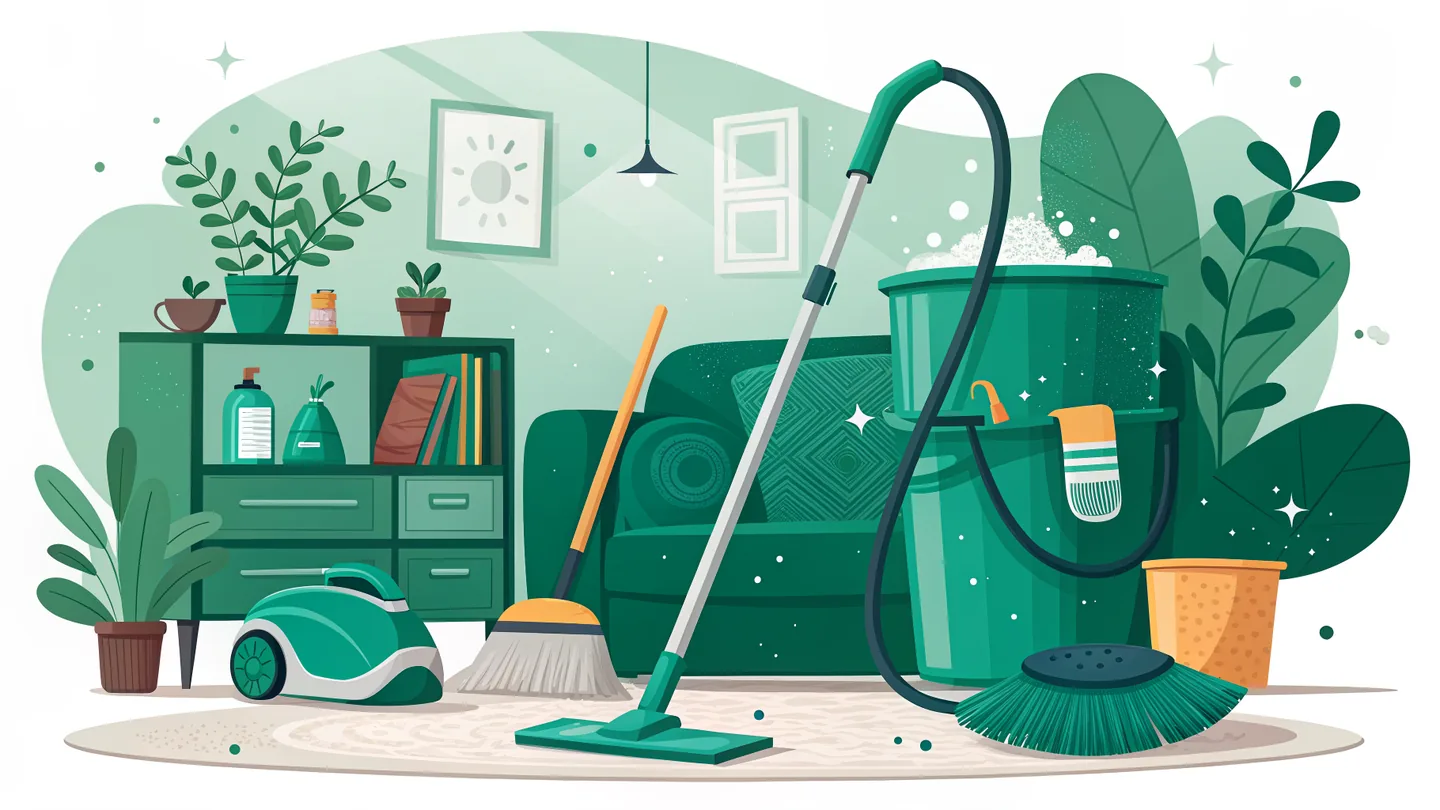
The Core Equipment Every Home Needs
Most cleaning tasks in a typical home can be handled with a compact set of equipment. Building around these basics before buying specialty tools saves money and storage space, and covers the majority of day-to-day and weekly cleaning needs.
Beyond these staples, most other equipment is a refinement for a specific surface or problem, such as a steam mop for tile grout or a handheld vacuum for car interiors and stairs.
- A vacuum cleaner suited to your flooring (upright or canister for carpet, a lighter stick or cordless model for hard floors and mixed surfaces)
- A microfiber mop or flat mop system for hard floors, paired with a bucket or spray bottle
- Microfiber cloths in multiple colors to avoid cross-contaminating bathrooms with kitchen surfaces
- A long-handled duster or extendable microfiber duster for ceilings, fans, and high shelves
- A scrub brush or non-scratch sponge for stuck-on grime
- A general all-purpose cleaner, a glass cleaner, and a bathroom-specific cleaner
Matching Equipment to Surfaces and Rooms
The single biggest factor in cleaning effectiveness is using equipment appropriate to the surface. Abrasive pads that work well on stainless steel can scratch glass cooktops or dull the finish on hardwood. Vacuum brush rolls designed for carpet can push dirt around on hard floors instead of lifting it. Before buying or using a tool, it helps to know what it's actually designed for.
Kitchens and bathrooms need equipment that stands up to grease, moisture, and frequent disinfecting, so materials like stainless steel, silicone, and washable microfiber outperform anything that traps and holds moisture. Living areas and bedrooms are generally about dust and soft-surface care, where a good vacuum with upholstery and crevice attachments does most of the work.
- Hard floors (tile, vinyl, laminate, hardwood): microfiber mop or vacuum with a hard-floor setting, avoiding beater bars that can scatter or scratch
- Carpet and rugs: upright or canister vacuum with adjustable brush roll height, plus a manual carpet rake for high-traffic wear
- Countertops and cooktops: non-abrasive cloths, and cleaning tools rated for the specific material, such as stone-safe cleaners for granite
- Bathrooms: a toilet brush, a squeegee for glass shower doors, and a grout brush for tile lines
- Upholstery and mattresses: a vacuum with an upholstery attachment and, occasionally, a fabric-safe stain remover
Essential Cleaning Methods and Technique
Good equipment underperforms without decent technique. A few habits make a disproportionate difference in results across nearly every task.
Top-to-bottom, dry-to-wet is the most reliable sequencing principle: dust and vacuum before mopping so you're not redistributing debris into wet cleaner, and clean higher surfaces like shelves and counters before floors so falling dust and crumbs get captured at the end rather than requiring a repeat pass.
Letting a cleaning product sit briefly, known as dwell time, is often more effective than scrubbing harder. Most disinfectants and degreasers need a minute or two of contact time to break down grime or kill germs, and wiping them off too quickly wastes their effectiveness.
- Work top to bottom in each room so debris falls onto surfaces you haven't cleaned yet
- Vacuum or dust before mopping or wiping down surfaces
- Give cleaning sprays a short dwell time before wiping, rather than spraying and immediately scrubbing
- Rinse or switch cloths often instead of spreading the same grime around a surface
- Finish with the floor last in every room
Choosing Between Manual and Powered Tools
Not every task benefits from a powered device. Manual tools like a good broom, a squeegee, or a scrub brush are often faster, quieter, and more durable for small or targeted jobs than pulling out a vacuum or steam cleaner. Powered equipment earns its cost and storage space when it saves meaningful time on a recurring task, such as vacuuming carpet daily in a home with pets, or when it reaches a level of cleaning manual tools can't, such as a steam cleaner sanitizing grout lines.
When deciding whether to invest in a powered tool, weigh how often you'll realistically use it, whether you have a suitable place to store it, and whether a cheaper manual alternative gets you close enough to the same result. A single high-quality vacuum and a couple of manual staples will outperform a closet full of narrow single-purpose gadgets.
- Choose powered tools for frequent, large-area, or physically demanding tasks (whole-house vacuuming, floor scrubbing)
- Choose manual tools for small, quick, or precision tasks (spot cleaning, edges, glass, small spills)
- Consider maintenance requirements before buying: powered equipment needs filter changes, battery care, or belt replacement
- Rent or borrow specialty equipment, like carpet extractors, for occasional deep cleans rather than buying
Maintaining Your Equipment
Cleaning equipment that isn't maintained stops cleaning effectively and can even make surfaces dirtier. A vacuum with a clogged filter loses suction and blows dust back into the room. A mop head that's never rinsed thoroughly just drags dirty water across the floor. Regular, simple maintenance keeps tools performing at their intended level and extends their working life.
Set a habit of cleaning your cleaning tools on a schedule that matches how often you use them: after every use for mop heads and sponges, weekly for vacuum canisters or bags, and monthly for filters and brush attachments.
- Empty and rinse vacuum canisters or replace bags before they're completely full
- Wash microfiber cloths and mop heads separately from other laundry, without fabric softener, which clogs the fibers
- Let sponges and brushes air dry fully between uses to prevent bacterial growth
- Check and replace vacuum filters and belts according to the manufacturer's guidance
- Store tools hanging or upright rather than balled up in a closet, which preserves bristle and fiber shape